Easy Drip Irrigation
Drip irrigation kills most natives!
Most drought tolerant plants do not like wet feet nor the way drip irrigation delivers the water (some trees have root systems that are mostly horizontal, while drip irrigation delivers the water vertically). The ecology of drip irrigation is a pond or lake. It's like planting the plant into a pond, for as long as the drip is on. If you water for four hours once per week with drip, picture the plant up to its leaves in a pond for four hours, every week. If you can move the emitters out away from the plants drip line as the plant grows that is acceptable for riparian and ruderal -type plants. Black polyethylene drip line is only good in towns and cities. In rural areas it is a chew toy for the rodents, see the critter section.
We used to tell people that it was OK to use drip irrigation until the plants were established; but, by the early 1980's we realized this to be a very bad idea for all but riparian plants. Drip irrigation encourages unhealthy root systems and bad soil ecology for your natives. Just water your plants with a garden hose(never set the hose down) or overhead until the plants are established. Or plant in the fall/winter and water only once and let the rains do the rest for you.
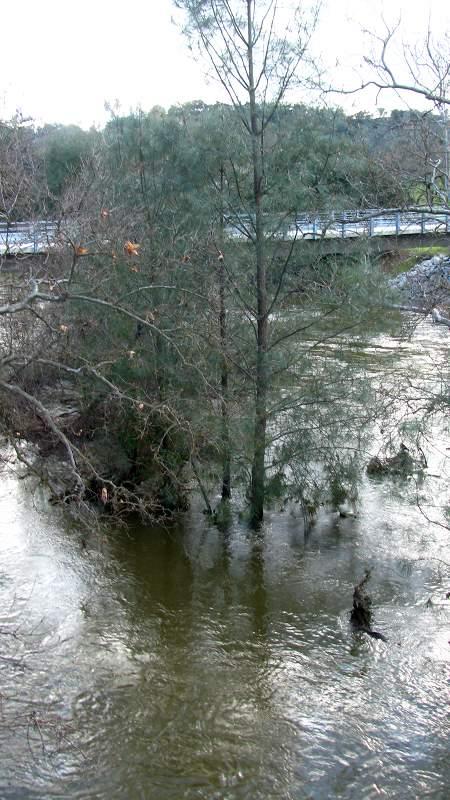
Drip irrigation should only be applied to certain types of crops/plants. Plants that live in creeks, seasonally are flooded, or tolerate zero drainage also tolerate and even flourish with drip irrigation. California Native plants that don't live under naturally soggy conditions die rapidly. Most native plants live from 3-5 years with drip irrigation. They grow fast and furious with lots of diseases. Then they just up and die. If your garden or landscape is coastal the landscape will live longer, but in the interior it probably won't survive past the third year.
A typical native like Ceanothus is reputed to be short lived, where in the wild the common lifespan is 50-100 years. Some of the plants on the nursery grounds are 20+ years old and are healthy specimens. They look clean, not a lot of dead wood, and tidy. The use of drip irrigation is leading to the short lifespan of native plants in gardens. We have gotten lots of feed back from customers over the years. Usually this consists of, “ my plant looks like it is dying of drought,” or “my plant only lived 3 years,” or “ my plant is covered with ___” fill in the blank with whatever nasty ailment you can think of. Drip irrigation is not consistent with the ecology of these species.
On the other side of the equation, Sedges and Rushes thrive under drip irrigation. Populus and Platanus can tolerate drip irrigation but don't thrive with it. For non-native plants: vegetables love it, and fruit trees tolerate it, particularly if they're near it (about at the drip line), but not directly watered (on the trunk or crown). Again, under drip irrigation the true drought tolerant plant species suffer and are short lived.
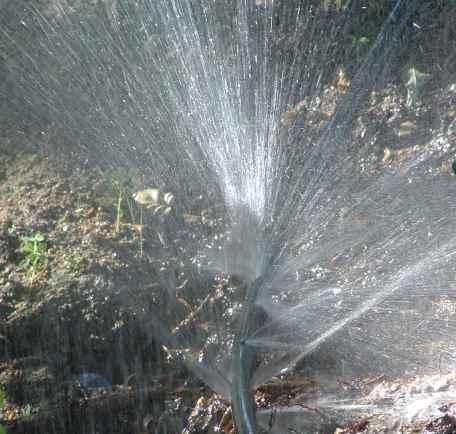
Design of a drip irrigation system is relatively easy. Start with figuring out how many times a week each plant needs, and then divide the yard up into several different watering regimens. For example, fruit trees like to be watered every two weeks, but most vegetables need water 2-3 times per week. Put all the fruit trees on one valve and all the vegetables on another. If you use a simple connector to a hose bib that may be all you need to think about. If you have a lot of trees or a lot of vegetables you'll have to do a little figuring before you rush down to buy your irrigation system. A normal faucet, fittings, and ½ inch polyethylene black tubing will provide about 6 gallons of water per minute. If you use 1 gallon- per- minute emitters you can use 360 gallons per valve, and if you use 4 gallon- per -minute emitters you can use only 90 emmiters. On the other side of this, most electric valves need about a 1 gallon- per- minute flow to turn off, so if you use 1 gallon- per -hour emitters you'll need at least 60 emitters for the valve to turn off automatically.
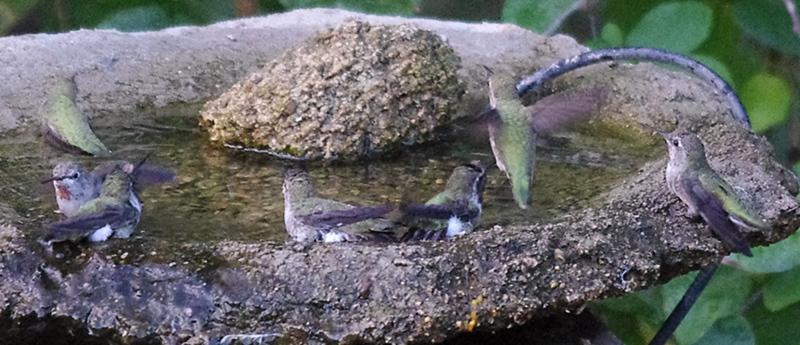
If you only have a few plants that need drip, cluster them into a minor 'plant community' and feed one drip emmitter into a bird bath. The resulting bird splash can water one fruit tree or a small front yard.