What to do after your hillside has burned to control erosion
Your home survived the wildfire. What to do with the bare hillside?
DO NOT plant SEED!
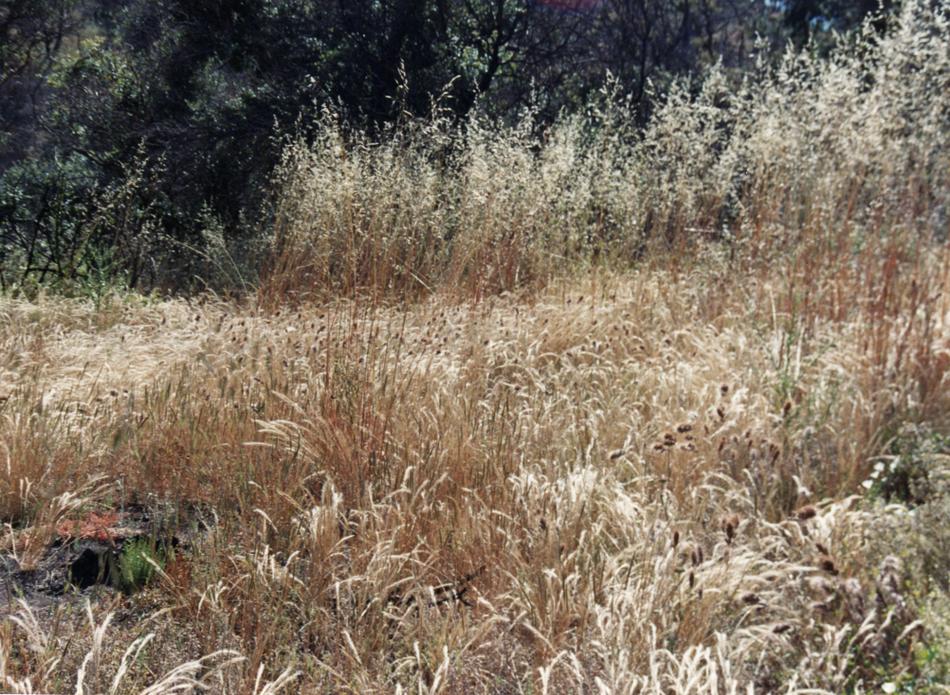
Seeding grasses and other weeds does not help the erosion, it actually causes greater erosion and can allow another fire next year that was worse than the first. SEEDING DOES NOT WORK! The seeds germinate after the second or third rain. The wildflowers germinate about the same time. If the weeds germinate before or at the same time as the wildflowers, the wildflowers will fail and you'll have a weedy mess that can burn the very next dry season.
When you do not seed after a fire, all the erosion stops after the first or second rain.
There is no documentation supporting seeding after fires for erosion control, nothing, zilch, zip. All the research points to seeding destroying the ecosystem of the site and contributing to more erosion and fires.
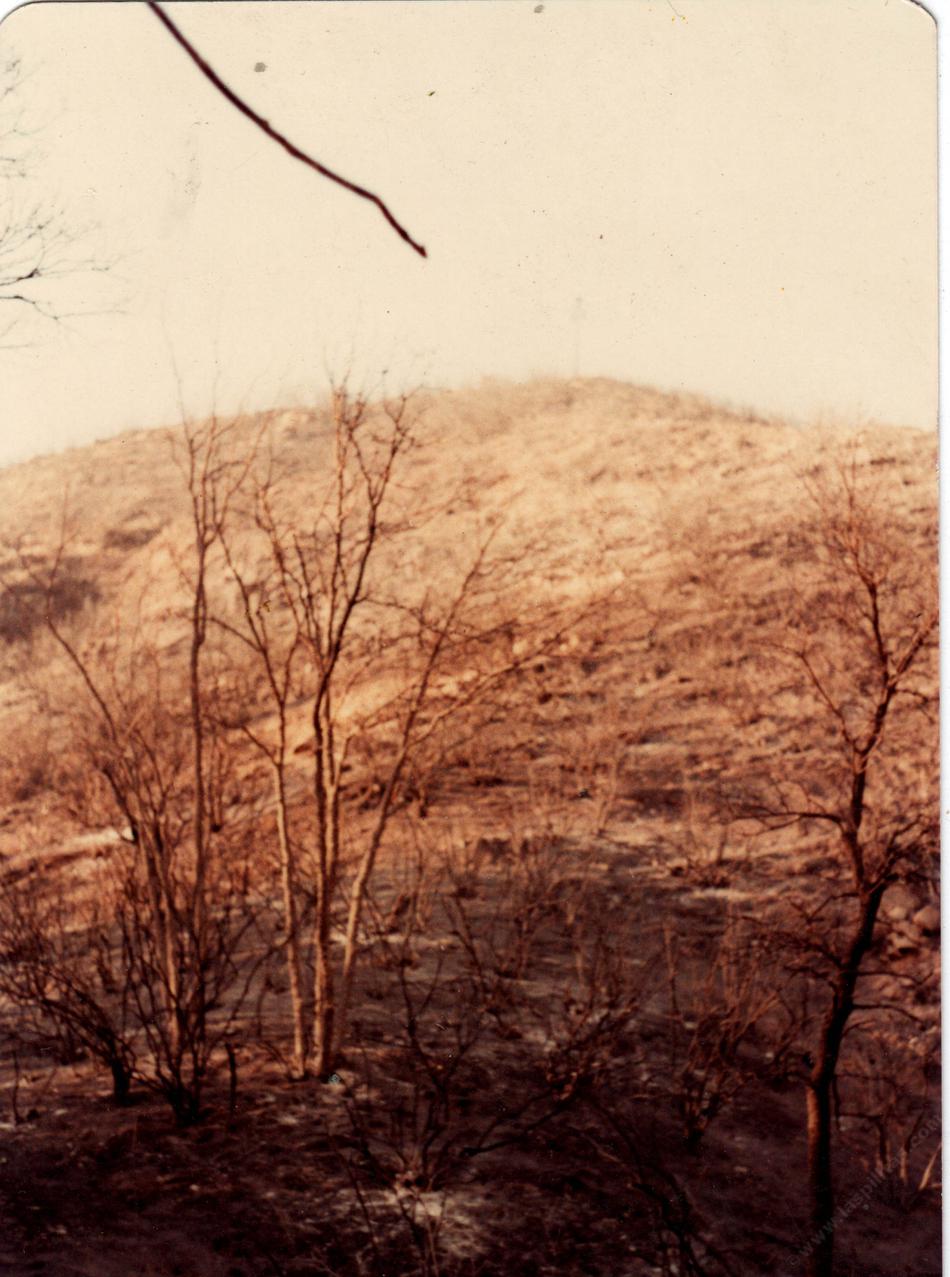
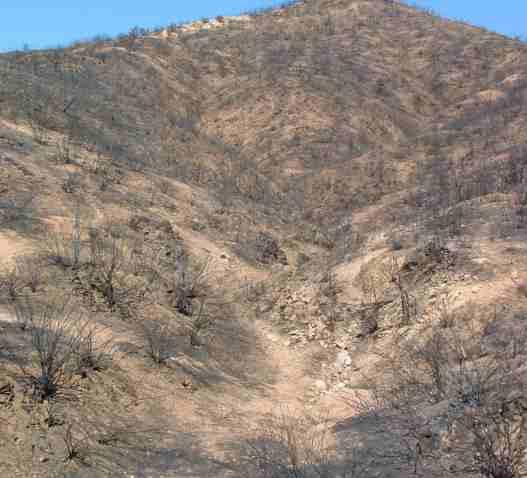
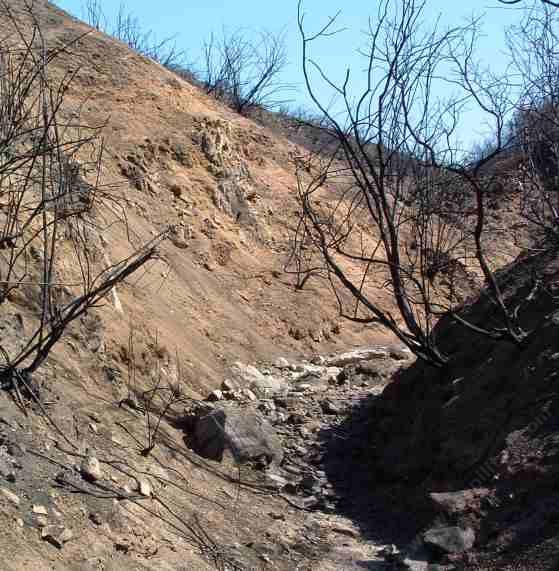
Most, if not all, the erosion occurs at the time of the first heavy rain. The whole hillside is coming at you at this time. A slope like the one in the picture can produce tons of material coming down on the first heavy rain.
Sandbags, check dams and making sure
your grades and drains work are
what you need to do before the first rain. You cannot stop the first
flush, but you have a chance to slow it down or divert it.
How can you control tons of material moved at ten to fifty miles per
hour? The bottom of the pictured slope had three to four foot of
material piled onto the road. A few check dams and some sand bags built
into an angle dam would have controlled the flow enough to keep the
debris off of the road.
You will not be able to control all of it, but there is a big
difference between six inches of debris against the house, deck, pool
or six feet of it. Most insurance companies pay some of the fire
claims, with a lot of games along the way, try collecting on slit
damage.
A simple check dam consists of three, six foot 5/8 inch rebar or six foot tee posts driven into the channel and the burn debris that is laying about woven between the posts. The goal is to not stop the flow, but slow it down from fifty miles per hour to five or so miles per hour, so the sediment can drop out of the flow and stay on the slope. More is not better, the material needs to flow through it or around it.
Picture a bunch of minivans of water driving as fast as they can at you. Just like in the desert flash floods.
If this slope is above you I would have no problem crossing fences to do this. If it is private property ask for permission, the owner is generally liable for the stuff that dumps on you, but he's also got his own set of problems so, HELP HIM, and yourself. If it's government land, just do it. BUT NO STRAW, HAY or other such garbage; those do not work anyway and make for weeds later on. (Instead of just mud into the house you'll have a 100-200 lb. bale of wet hay.) The goal is to slow the runoff down, not stop it. Stopping the runoff will not work; hay bales will end up somewhere else, and even if they do stay in place, the silt builds up behind them and blows over them; hay bales just delay the problem, not to mention they are a great source of weeds. You want a weave about as dense as a venetian blind. The holes/slits/weave should be between an inch to 2 inches. You can throw some boulders into the weave if you wish.
You'll need to build one of these contraptions every twenty feet on steep slopes, every hundred feet on small slopes. Every gully needs one. The bigger and steeper the gully the more you'll need and the looser the weave needs to be. You are not making dams! You're trying to slow the water down. A the bottom of each gully that points at you make a double wall of sand bags that has an outlet pointed where the flow can cause the least damage.
Mother nature can fix
most hillsides without your meddling. Leave the slope alone and you get
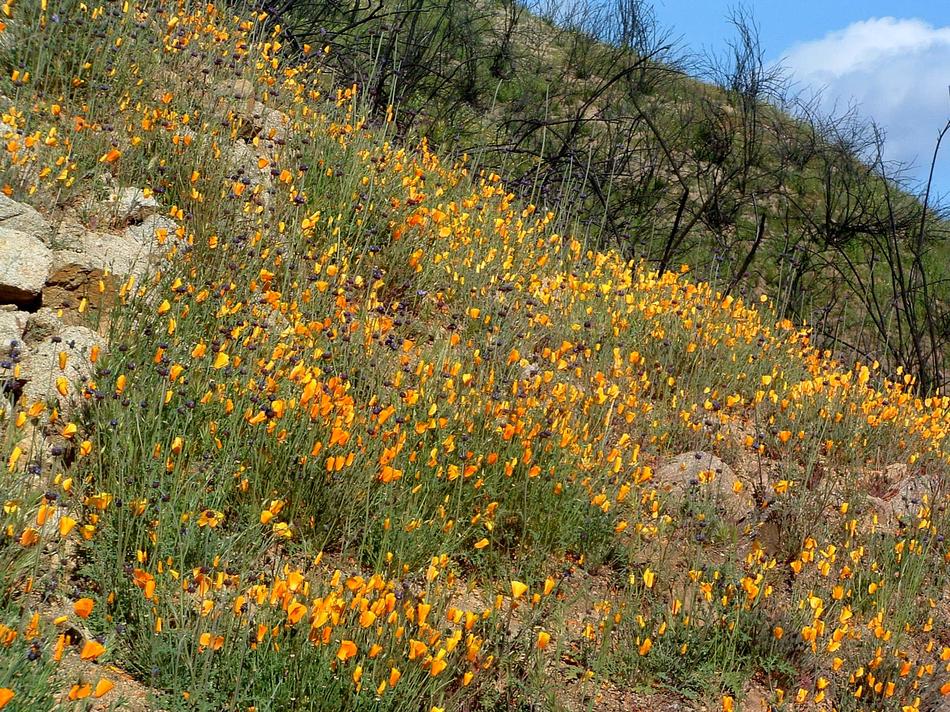
wildflowers. Mess with it and you get weeds and greater mudslides!
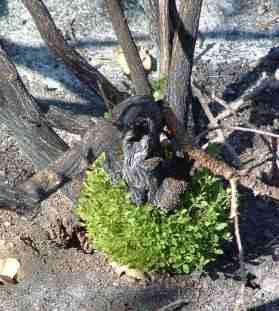
Many of the plants left as blackened stumps on the slopes will sprout and grow from the base into new plants and prevent erosion on the slopes, just as they did before the fire.
Remember, after just a couple of rains, mother nature has 'fixed' the problem all by her self.
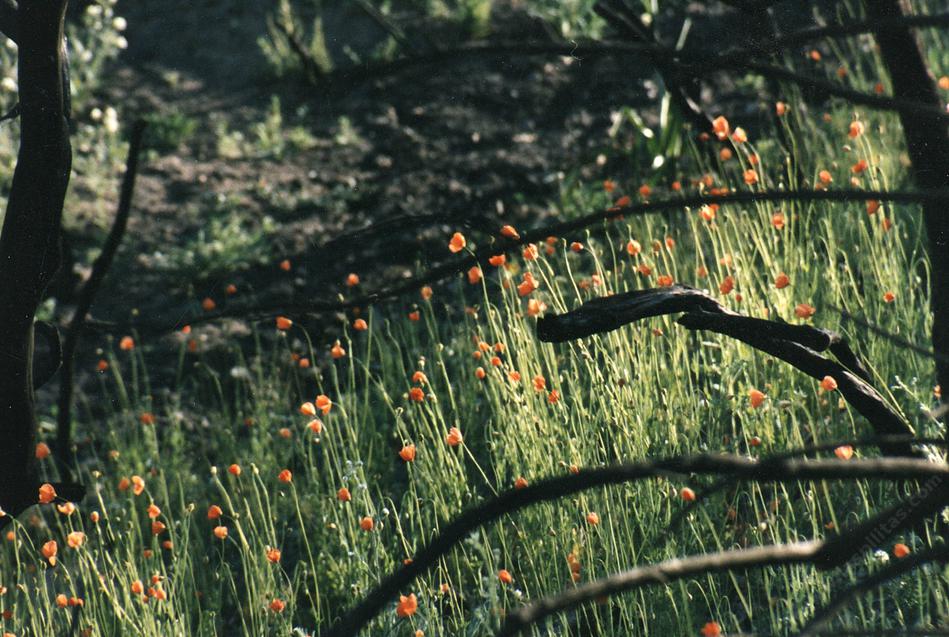
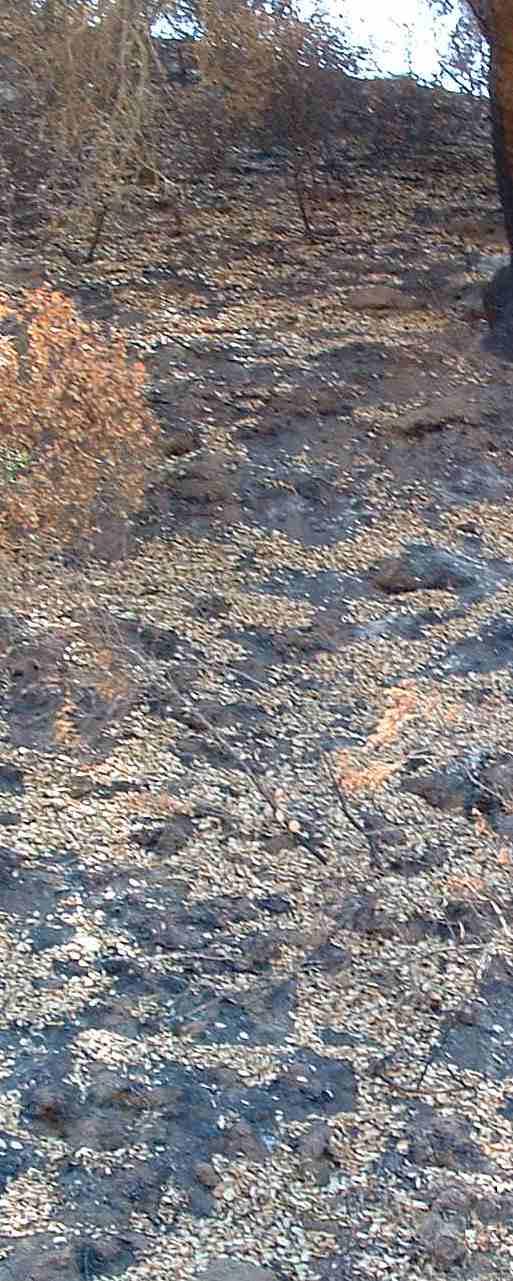
After the fire the slope can look like this, sometimes better, sometimes worse. The soil can look like a fired brick, literally, but the native wildflowers still come up. The California native wildflowers are naturally adapted to the high heat from wildfires.
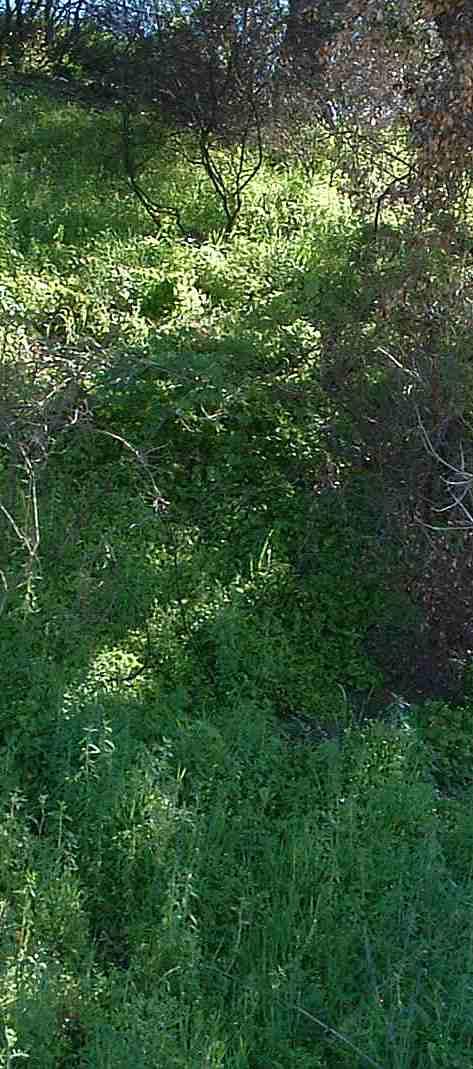
Many of the slopes will be lush with fire-following wildflowers after just a few rains.
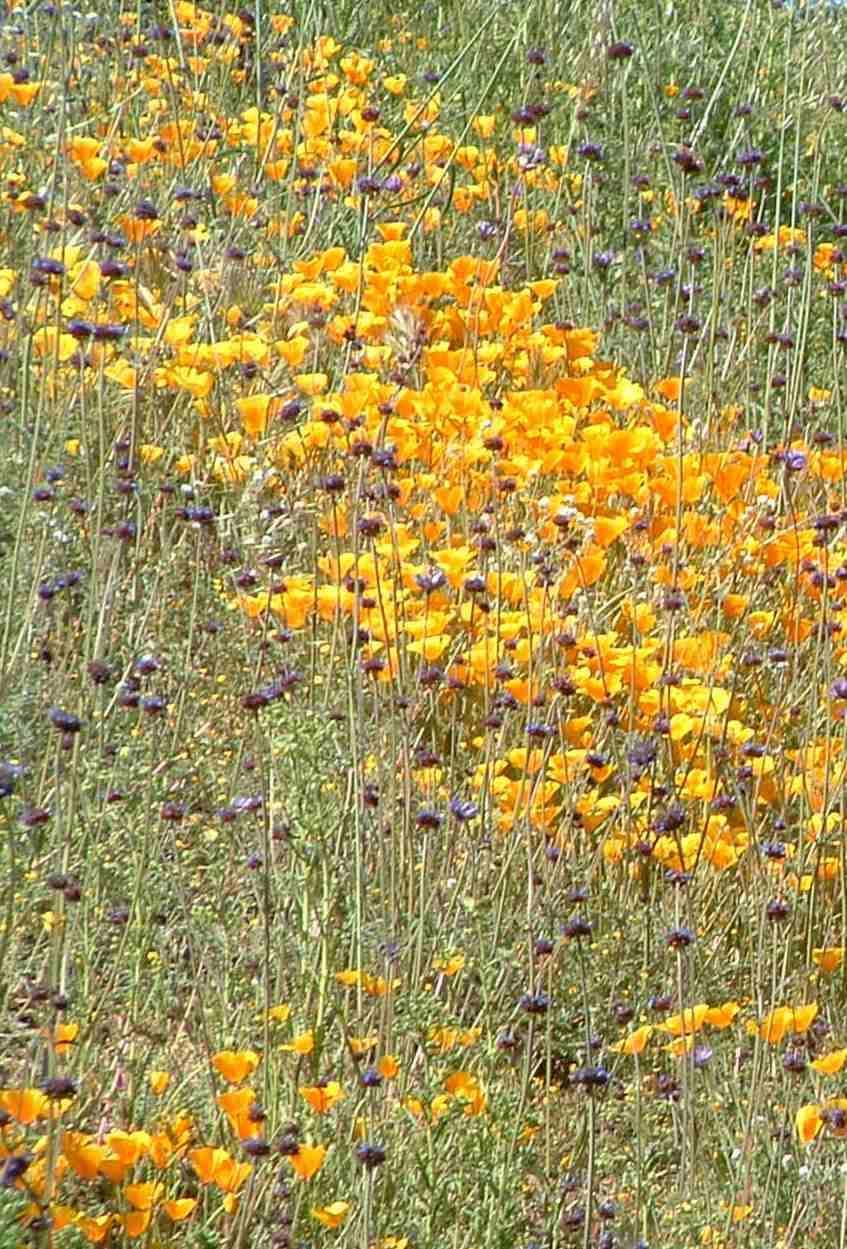
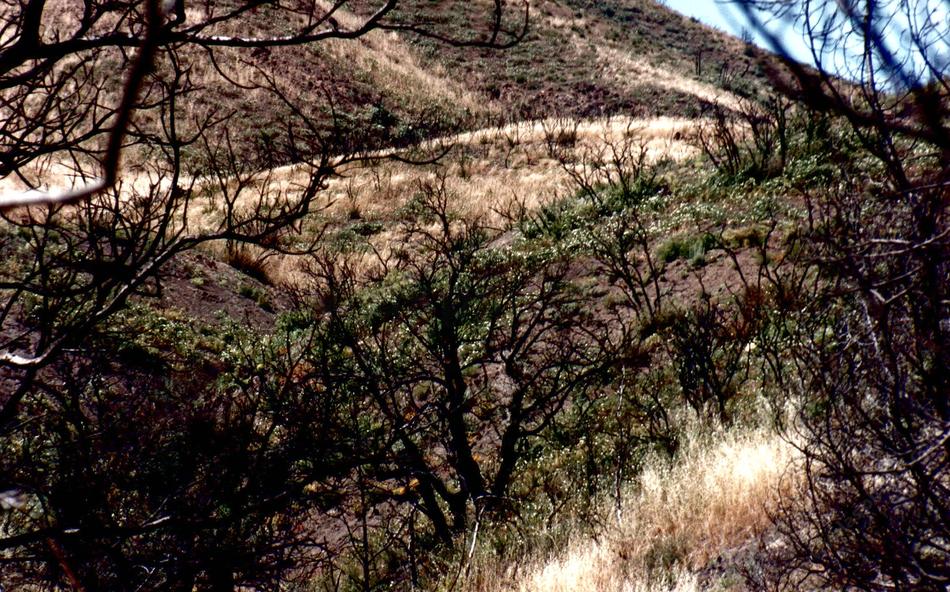
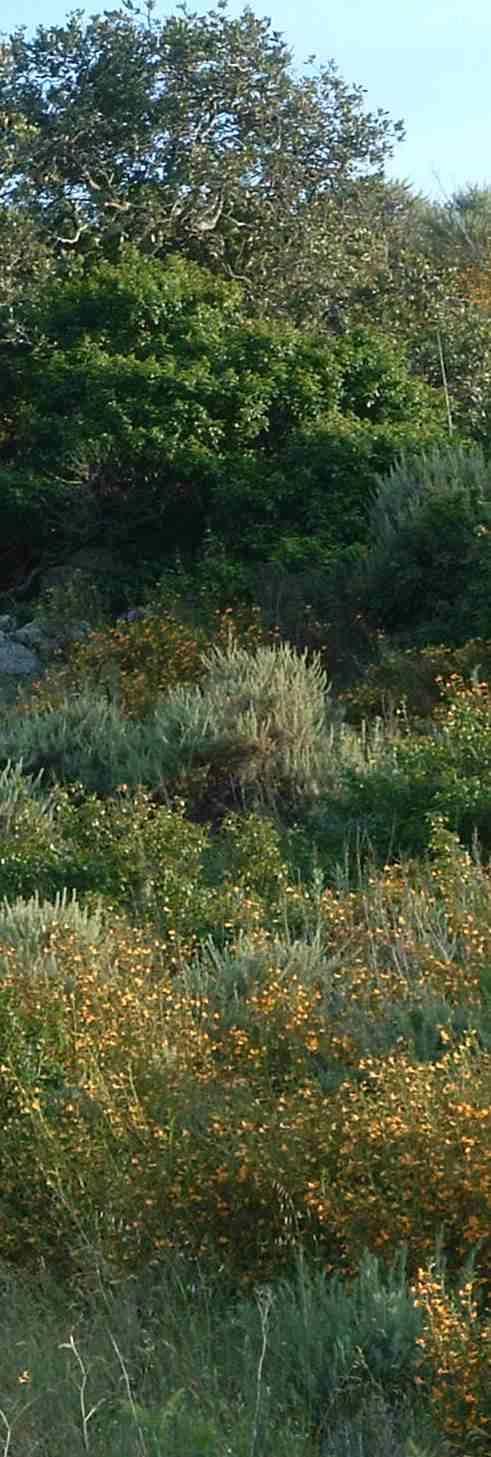
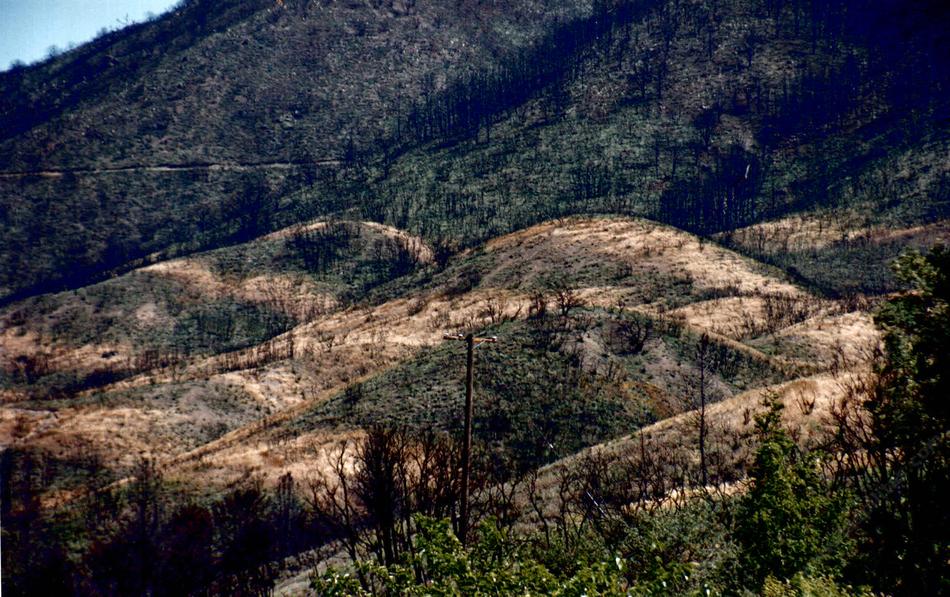
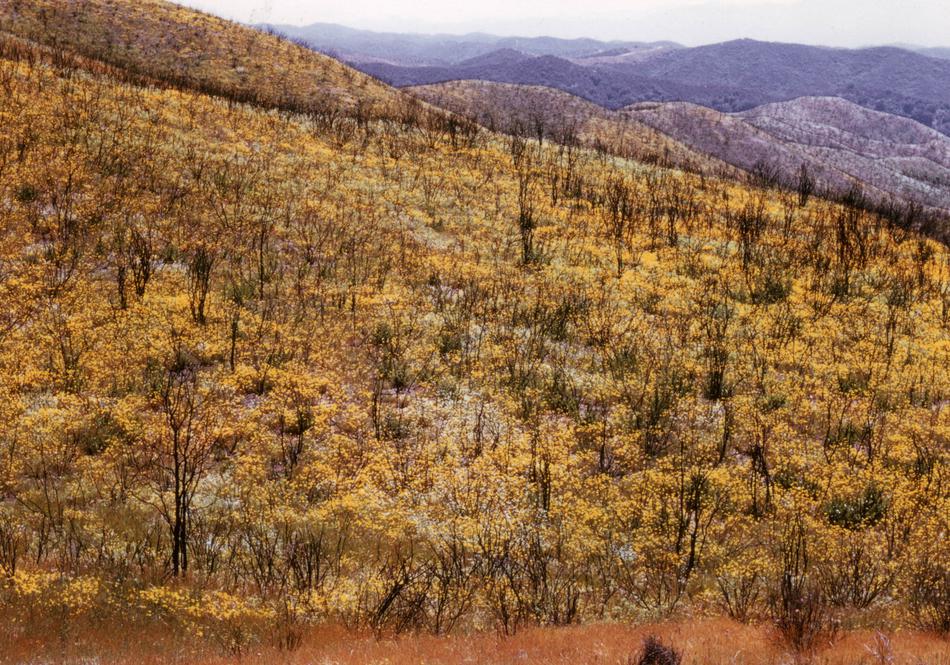
Photos do not scan that well, the yellow and orange were poppies, goldfields and other flowers. The only grass was right along the road from traffic.