Manual of California native plants.
Drainage
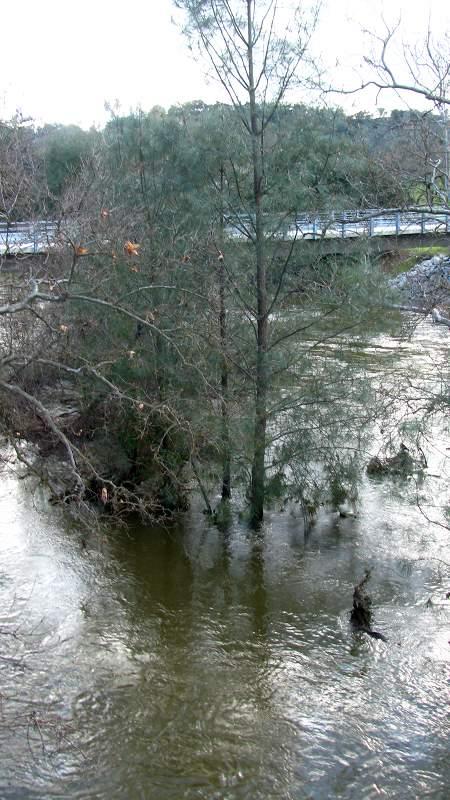
Good aeration is essential for the vitality of the fungus(mycorrhiza) that lives on the roots in association with California native plants; even intermittent water logging is bad for the fungus and its host. California native plants show a greater sensitivity to poor aeration than weedy ruderal plants. Since all but a few of our western natives need mycorrhiza, a good root oxygen level needs to be maintained when the mycorrhiza is active. (Spring through fall on some sites, and all year on others.) Think out winter drainage and know where the water will go, where water will stand, and where the ground will be saturated and anaerobic conditions will persist.
Is the garden or restoration in a snowy area? Is the snow in a loose form or compressed form? A covering of ice or compacted snow is especially dangerous for herbaceous plants and prostrate woody plants. ... “respiratory carbon dioxide attains concentrations as high as 44% and oxygen drops to 3-5%. Under such conditions [it is] comparable to flooding-induced hypoxia” (Sakai). If you have a spot where the snow slides down a roof or accumulates in deep drifts this is why the plants look drowned when the snow melts; a funny form of poor drainage.
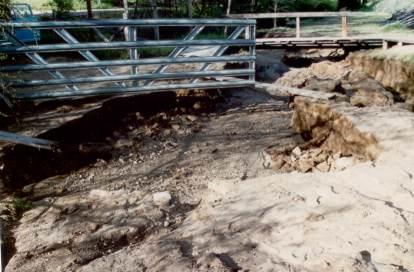
Plan for the worst case. If once in the last 50 years this site had 50 inches of rain, plan on it hitting your installation the next rainy season (maybe the next day). Work out the square footage of your site and how many actual gallons are going to go through the drain. Knowing if it is 10,000 or 1000 is very helpful. If you have a 3000 sq. ft. roof and a 2 inch downpour a 3 inch drain probably will not work! Four inch drain pipe is pretty much the minimum for residential installations. A solid PVC, non-perforated leach pipe is preferred over corrugated pipe. After a few years, four inch, smooth-walled PVC pipe will carry almost as much as a six- inch corrugated pipe. The smaller, three inch corrugated 'drainage' pipe is a waste of time and money. If silt drains off the site, the pipe will silt up in one year.
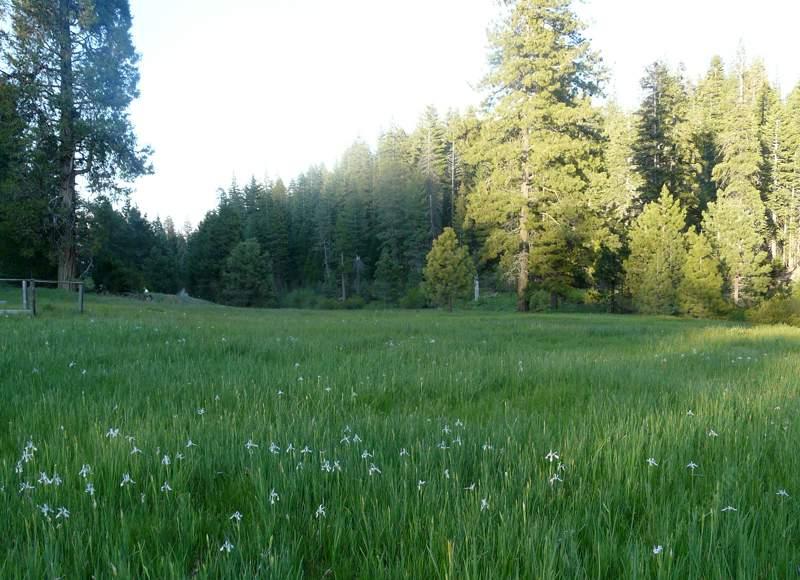
If you are working in an area where native plants are about, look them up on our website. If they live in riparian, freshwater marsh or meadow plant community, the area is a wet spot most years, and flooded on bad years. If you've something on a site as the water source that created this wetland, figure out what it is and how to work with it to control the wetland.
Diversion walls only work on surface drainage. Burying a wall 6' deep to divert a spring just doesn't work.
Usually sub-surface water is more difficult than the surface water. Put French drains in against walls or foundations that act as dams or catch basins, and use this water in a spot where you need seasonal water. Alternatively, plant these poor-draining spots with reeds and rushes that have internal aeration systems so they can live in bogs. Lowering the grade and moving dirt around so the sub-surface water becomes surface drainage is often more effective.
Digging a hole bigger and deeper than the plant makes sump holes. Please do not plant our plants in sump holes. These amended holes fill up with water in the winter. Plant the plants at soil level with no soil amendment and top off with mulch. This is what helps drainage more than any thing else can as it will encourage the soil organisms to loosen the soil for aeration and water penetration (see mulch). A mature planting covered with mulch has little or no runoff (Patric; Hill & Rice; Heady; Horton & Kraebel;Hellmers, et. al.; Curtis).
This is an unscientific, but observational statement; soil around a constant water leak or wet spot with standing water smells bad. This smell can be used to figure out how long a leak has been leaking and how big it was. The soil smells the worst, a foot down, near the leak and less bad as you move away. If you smell a latrine on a site you've got a problem. The smell can be sensed even if there is no visible evidence on the surface. The yard smells musty, cheesy, or rancid. Sometimes the soil is unstable because the leak or drainage problem has created a 10-20,000 gallon wet spot, just under the surface. If one of these wet spots is on a slope, the slope can slide.
Once you fix the drainage on the site, then setting out the plants and establishing a planting will bring the soil back to a healthy condition. The plants themselves and their associated microorganisms will aerate and open up the soil so that the roots can breathe.